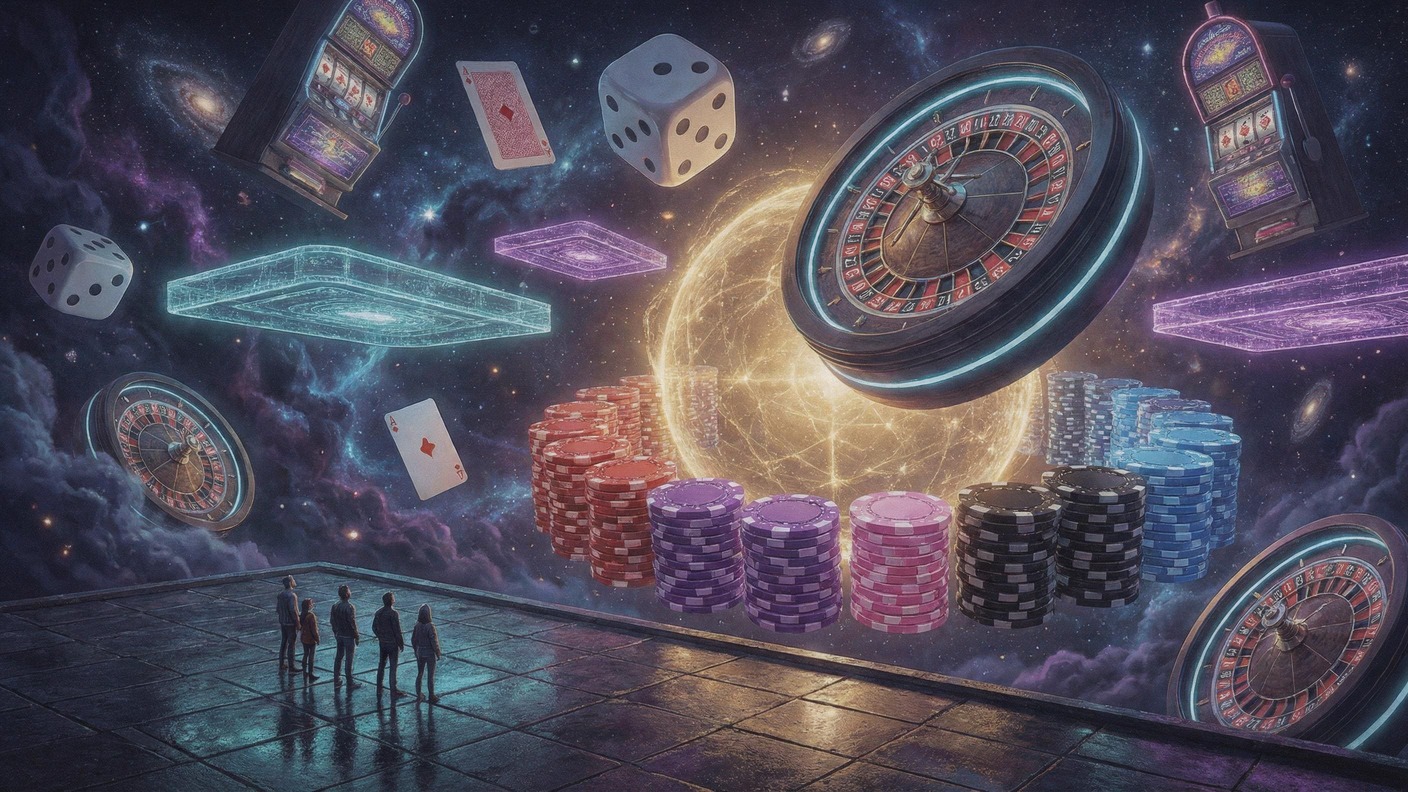
As a representative of the upper echelons of the online gambling industry, I have watched the core product of our business transform from static spreadsheets of numbers into high-budget, cinematic spectacles. In the year 2026, the traditional distinction between a gambler and an audience member has completely dissolved. If you have spent your time strictly at the blackjack table or spinning the reels of a solitary slot, you are missing the most significant cultural shift in the history of wagering. The introduction of modern live games has fundamentally altered the psychological reward system of the casino, moving away from the isolated tension of the individual hand and toward a shared, multi-sensory journey. Every serious player, from the conservative grinder to the high-stakes visionary, needs to cross the threshold into the studio environment at least once to understand how the architecture of winning has evolved.
The Breaking of the Fourth Wall in Gambling
For decades, the casino experience was a two-dimensional interaction between a human and a machine or a silent dealer. In 2026, we have broken that barrier. The modern game show is an interactive broadcast where the host is not just a facilitator but a character in an unfolding narrative. When you enter a studio-style game, you are stepping onto a stage designed with the production values of a Hollywood blockbuster.
This shift is crucial because it changes the emotional frequency of the play. In a standard game, the silence of a losing streak can be oppressive. In a game show, the charisma of the host and the energy of the studio audience (even the virtual one) maintain a baseline of entertainment that transcends the outcome of the individual wager. You are no longer just betting on a result; you are participating in a performance. This human element reduces the “tilt” factor that plagues many players, as the entertainment value provides a psychological cushion that a cold slot machine simply cannot offer.
The Mathematics of the Massive Multiplier
As an industry expert, I often focus on the unique volatility structures that only game shows can provide. Traditional games have a linear payout system. You bet a dollar to win two, or thirty-five. Game shows in 2026 utilize a tiered RNG-overlay system that creates compounding multipliers.
This is the “Black Swan” event of the gambling world. Most of the time, the game operates on a steady, low-payout rhythm, but the potential for a 5,000x or 10,000x multiplier is always present in the bonus rounds. These multipliers are not just random numbers; they are engineered through physical apparatuses like massive wheels, coin flips, or pachinko-style drop boards, combined with digital layers. The excitement comes from the fact that these huge wins are often community events. When a 1,000x multiplier hits, it doesn’t just hit for one lucky person; it hits for everyone who placed a wager on that segment. The collective roar in the digital chat is a phenomenon that every player should experience at least once.
Social Proof and Collective Excitement
One of the most overlooked aspects of the modern game show is the social dynamic. In a traditional setting, you are often playing against the house or other players in a zero-sum environment. Game shows are collaborative.
When a bonus round triggers, the entire lobby of thousands of people enters the arena together. This creates a sense of “Social Proof.” You see the winning notifications of your peers scrolling by, and you feel the shared tension as the wheel slows down. In our 2026 interfaces, we have integrated advanced social features where you can see the reactions of other players in real-time. This turns a solitary act into a communal festival. For a player used to the lonely grind of the video poker terminal, the realization that thousands of people are cheering for the same outcome is a powerful and refreshing change of pace.
Cinematic Production Values and 2026 Technology
The tech stack behind a 2026 game show is a marvel of engineering. We use 8K ultra-wide cameras, augmented reality (AR) overlays that place digital characters into the physical studio, and haptic feedback systems that vibrate your mobile device in sync with the game’s music.
The Visual Fidelity Comparison
| Feature | Traditional Live Table | 2026 Game Show Studio |
| Camera Count | 1-2 Static Angles | 12-20 Cinematic Angles |
| Visual Effects | None | Real-time AR and 3D Overlays |
| Soundtrack | Background Studio Noise | Custom Orchestral Scores |
| Interactivity | Chat Box only | Direct Host Interaction and Mini-Games |
| Payout Potential | Low to Medium | Extremely High (Multipliers) |
Trying a game show allows you to see where the industry’s R&D budget is truly going. The level of detail-from the custom-made costumes of the hosts to the intricate mechanics of the physical bonus machines-is designed to keep your brain engaged on multiple levels. It is the pinnacle of what we call “Active Entertainment.”
Diversity of Formats: Beyond the Wheel
Many players avoid game shows because they think it is just a big wheel. As an insider, I can tell you the variety in 2026 is staggering. We have adapted classic board games into massive 3D worlds where a digital avatar walks through a landscape of prizes. We have “crash” style shows where you must bail out of a rising multiplier before it explodes. We even have sports-themed shows where your bets interact with real-time athletic data.
This variety means there is a show for every psychological profile. If you are a strategist, there are shows that involve choice-based bonus rounds where your decision affects the volatility of the outcome. If you are a seeker of pure chance, the high-energy wheels are perfect. Exploring these different formats gives you a broader perspective on how probability can be packaged as a product.
The Transparency of the “Big Event”
In the world of online gambling, trust is everything. While RNG-based slots are perfectly fair and audited, some players still feel a disconnect from a purely digital algorithm. Game shows solve this through physical transparency.
When you see a physical ball drop into a physical slot, or a real person spin a massive mechanical wheel, the skepticism vanishes. In 2026, we even use high-speed cameras that allow you to see the microscopic friction of the wheel as it stops. This physical proof of luck is deeply satisfying. It removes the “black box” mystery of gambling and replaces it with a tangible, visible event. Every player should experience the relief of seeing a win happen in real-time, in a physical space, captured by a dozen different camera angles.
Low Entry Barriers and High Reward Potential
Unlike high-stakes poker or complex blackjack strategies, game shows are incredibly accessible. You do not need a degree in mathematics to understand a coin flip or a wheel spin. This accessibility allows for a “relaxation” session where you can enjoy the spectacle without the heavy cognitive load of tracking cards or calculating pot odds.
However, do not mistake accessibility for lack of potential. The betting ranges in our 2026 shows are vast, allowing a casual player to bet cents and a high-roller to bet thousands. The beauty of the multiplier system is that even a small wager can theoretically turn into a significant payout. It democratizes the “big win” experience, making it possible for anyone in the lobby to be the hero of the hour.
Frequently Asked Questions
Why should a serious blackjack player try a game show?
A serious player should try it to understand the shift in volatility. While blackjack is a game of marginal gains and losses, game shows offer a “Lottery Style” upside within a live environment. It serves as an excellent way to diversify your gaming session and experience the social side of the industry that table games often lack.
Are game shows in 2026 more expensive to play?
Not at all. In fact, because these games are designed for mass participation, the minimum bets are often lower than at standard tables. You can participate in the full cinematic experience for as little as ten cents per round, making it one of the most cost-effective forms of entertainment in the casino.
How do the multipliers work in these shows?
Multipliers are usually generated by a digital Random Number Generator (RNG) and then “assigned” to a physical outcome on the wheel or board. This creates a hybrid game where the physics of the studio and the logic of the software work together to determine the final payout, often reaching thousands of times the initial bet.
Is the host really seeing my messages in the chat?
Yes. In 2026, hosts have high-definition monitors that display the community chat. They are trained to respond to players, celebrate wins, and even engage in light banter. This real-time interaction is a core part of the entertainment and makes the player feel like a valued part of the show.
What happens if the video stream lags during a spin?
Our 2026 infrastructure is designed with redundancy. The actual outcome of the game is determined on our secure servers and recorded by the physical sensors in the studio. If your stream lags, the game continues, and your balance is updated instantly. You can always watch the replay in your account history to see exactly what happened.
Are these games more about luck than strategy?
Generally, yes. Game shows are designed to be high-entropy, entertainment-first experiences. While some shows allow you to choose your volatility level in bonus rounds, the core outcomes are based on pure chance. This makes them the perfect counterpoint to skill-based games like poker.
Why is the atmosphere in game shows so much louder than other games?
The noise and energy are intentional. We use professional sound engineers to create a “festival” atmosphere. The goal is to keep the energy high and the engagement levels peaked. The music, sound effects, and host’s commentary are all part of a carefully designed psychological loop that makes the experience more memorable.
Can I play these shows on my phone?
Absolutely. Over 80 percent of our players in 2026 use mobile devices. The interfaces are optimized for vertical and horizontal play, with the video feed taking center stage and the betting options integrated seamlessly at the bottom of the screen.
Do these games have a higher house edge than blackjack?
Typically, the house edge in game shows is slightly higher than in perfect-strategy blackjack, usually ranging between 3 and 5 percent. However, the entertainment value and the potential for massive multipliers often compensate for this in the eyes of the player.
What is the most popular game show format in 2026?
Currently, the “Hybrid Board Game” and “Multiplier Wheel” formats are the most popular. Players love the combination of a physical wheel and a secondary 3D digital world where they can win prizes through an avatar.
The Conclusion of the Modern Gambler’s Journey
From my perspective as an industry representative, the rise of interactive shows is the ultimate expression of the “Gambling as Entertainment” philosophy. We have moved far beyond the days of simple transactions. In 2026, when you choose to play a show game, you are investing in a high-quality production that respects your time and your desire for excitement. The blend of human charisma, physical transparency, and the potential for life-changing multipliers creates a unique cocktail of emotions that no other casino product can replicate. Even if you consider yourself a purist who only plays for the odds, the sheer technological mastery on display in a modern studio is worth the price of admission.
Ultimately, trying a game show once will broaden your understanding of what a casino can be. It is a world where winning is celebrated by thousands, where the host knows your name, and where the next spin could launch a cinematic bonus round that pays out a fortune. In an increasingly digital and isolated world, these communal experiences provide a sense of connection and shared joy that is rare. Step into the studio, engage with the host, and let yourself be part of the show. You might find that the most exciting thing about the casino in 2026 isn’t just the money you can win, but the incredible way in which you win it.